

Legionella Awareness
Know where legionella grows in a building’s water, carry out the routine checks you are asked to do, and report what is not right.
Content last checked on 18 November 2026.
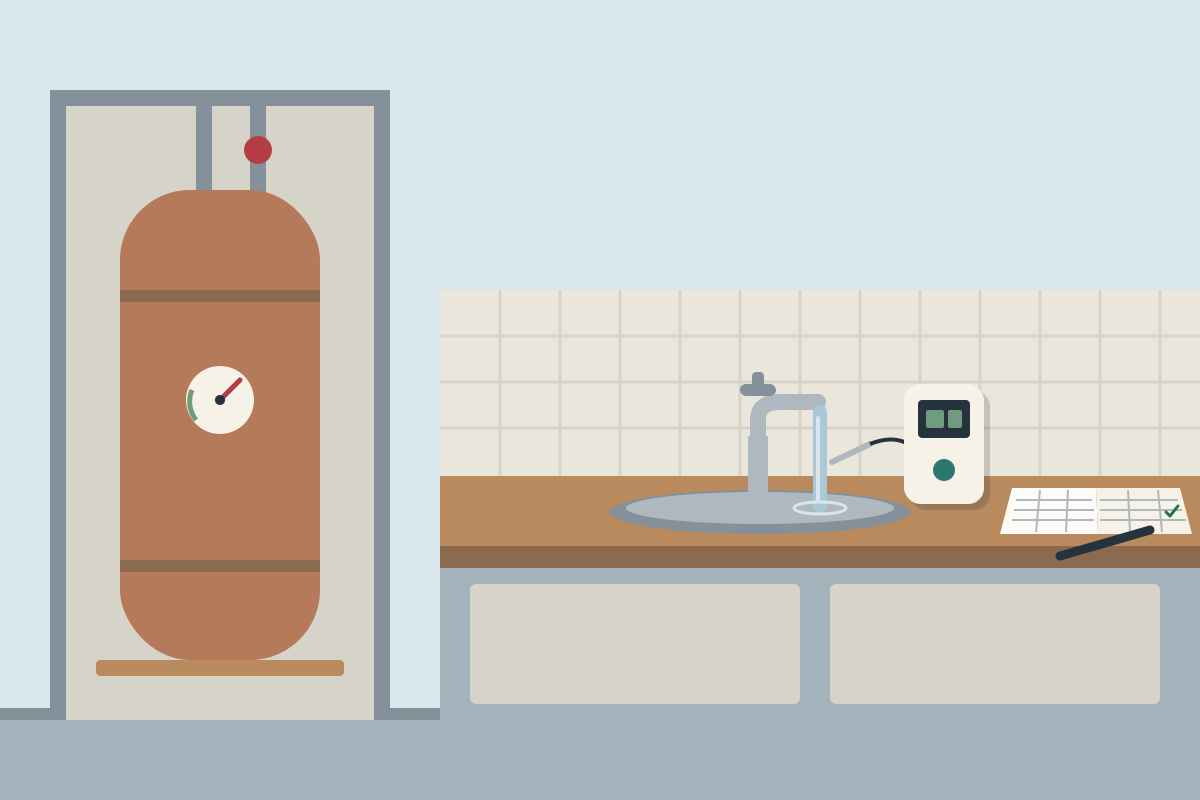
About this course
- Who it is for
- Caretakers, cleaners, groundspeople and volunteers who do routine water checks, and the clerks, facilities officers and councillors who look after a building.
- How long it takes
- About 64 minutes if you read the lessons, or 67 if you listen to them, including the final assessment. An estimate from the course’s length, not yet timed with learners.
The lessons
- What legionella is and where it grows
- Who decides what, and your part in the written scheme
- Temperature checks, without scalding
- Flushing little-used outlets and cleaning shower heads
- Recording what you did
- When a check is not right, and buildings back from closure
- If someone may be ill or hurt
What you will be able to do
- Know where legionella bacteria grow in a building, and that people usually catch them by breathing in fine droplets.
- Know who decides what, including the person the council appoints to manage its water systems day to day.
- Find your own tasks in the council’s written scheme, the plan that sets out each water check.
- Pass on, rather than do, any request to sample the water, change controls, disinfect or say the water is safe.
- Know how to take the temperature checks your scheme gives you, and judge each reading against its target.
- Know how to check hot water without scalding yourself or anyone nearby.
- Know the conditions for flushing a little-used tap or shower, and stop and report when one is missing.
- Record each check honestly, with the actual reading, and record a missed check as missed.
- When a check is not right, keep the outlet out of use where the scheme says, and report it in time.
- Leave heater and valve settings alone, and restart lapsed flushing only on the named person’s instruction.
- Know the signs that mean calling 999 for someone who may be ill, and when to use a GP or NHS 111.
- Report a possible case linked to a council building promptly and privately to the person responsible for its water.
The law and guidance it rests on
The sources the course’s content was checked against, each with what it asks of a council and a link to the official text.
Control of Substances Hazardous to Health Regulations 2002 (COSHH)
Legionella is a hazardous substance under these rules: an employer must assess the risk from it and prevent or control it.
Health and Safety at Work etc. Act 1974
An employer must protect the health, safety and welfare of its staff and of others its work affects; staff must take reasonable care and co-operate.
Reporting of Injuries, Diseases and Dangerous Occurrences Regulations 2013 (RIDDOR)
Some diseases caught through work, which can include Legionnaires’ disease, must be reported to HSE.
HSE: Legionnaires’ disease, Approved Code of Practice (L8)
HSE’s code on how those responsible for water systems should assess and control the risk.
HSE: technical guidance HSG274 Part 2, hot and cold water systems
HSE’s guidance on the temperature checks, flushing and records for a building’s water.


See Pavryn Learn for yourself
A demonstration takes you through a learner’s course and the officer’s reports.