

Body Fluid Spills and Discarded Needles
Keep people safe from blood, vomit and other body fluids, use a spill kit when you are trained to, leave a found needle untouched and report it, and know what to do at once after a needle injury or splash.
Content last checked on 19 November 2026.
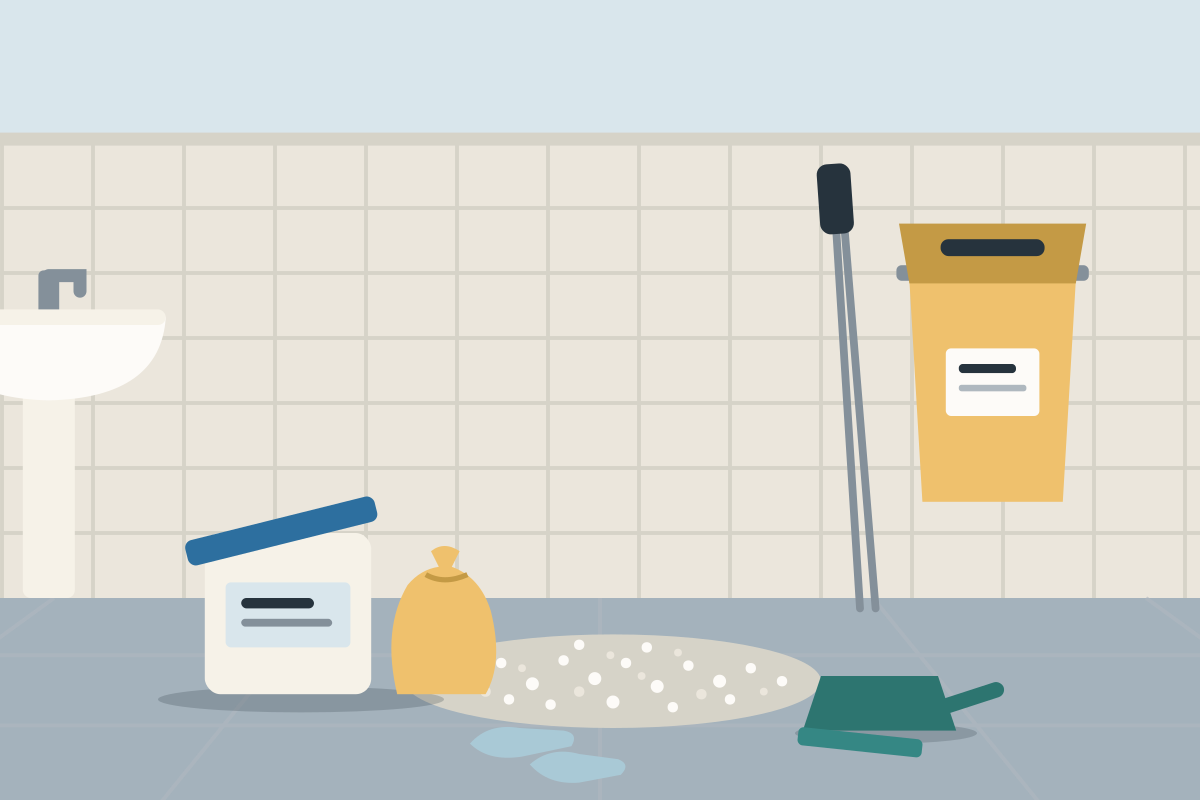
About this course
- Who it is for
- Front desk staff, caretakers, cleaners, events staff, and parks, grounds and litter staff; the supervisors who hold the spill kits; and volunteers who help at events or litter-picks.
- How long it takes
- About 48 minutes if you read the lessons, or 51 if you listen to them, including the final assessment. An estimate from the course’s length, not yet timed with learners.
The lessons
- How infection can pass, and who does what
- Spills: make it safe, then the spill kit step by step
- Discarded needles and other sharps
- After a needle injury, a splash, or blood on broken skin
- Reporting, follow-up and your limits
What you will be able to do
- Know how germs in blood get in: through a needle or sharp, broken skin, or a splash to the eyes, nose or mouth.
- Treat every spill and every used needle as if it could pass on an infection.
- Put a hurt person first: call 999 in an emergency, and alert the first-aid contact as a separate step.
- Keep people away from a spill and report it, unless you are trained and authorised to clear it, with a complete kit.
- Know the steps of a spill kit in order, for when the council has trained and authorised you to use one.
- Know why a chlorine product, such as bleach, must never go straight on urine, even when there is blood in it.
- Leave a found needle untouched, even with gloves or a litter-picker, keep people away, children first, and report it at once.
- Know the first aid to give straight away after a needle injury, a splash, or blood on broken skin.
- Get medical advice immediately after an exposure, without finishing the task first, and follow the clinician’s instructions afterwards.
- Report spills, needle finds, exposures, near misses and used kits straight away through the council’s route.
- Decline work beyond your training or authorisation, and ask the council to arrange the right person.
- Use the safeguarding route when what you see or are told suggests a child or adult may be at risk.
The law and guidance it rests on
The sources the course’s content was checked against, each with what it asks of a council and a link to the official text.
Control of Substances Hazardous to Health Regulations 2002 (COSHH)
Germs in blood and body fluids count as hazardous substances: an employer must assess the risk, prevent or control exposure, and offer vaccination where its assessment shows it is needed.
Health and Safety at Work etc. Act 1974
An employer must protect the health, safety and welfare of its staff and of others its work affects; staff must take reasonable care and co-operate.
Occupiers’ Liability Act 1957, section 2
Whoever occupies a place must take reasonable care that visitors are reasonably safe, and must expect children to be less careful than adults.
Reporting of Injuries, Diseases and Dangerous Occurrences Regulations 2013 (RIDDOR)
The responsible person must report to HSE an incident that could release a germ likely to cause severe illness, and certain diseases caught at work.
HSE: bloodborne viruses
HSE’s guidance on how bloodborne viruses spread at work and how to prevent exposure, including never handling a found needle.
HSE: how to deal with an exposure incident at work
HSE’s steps after a needle injury or splash: first aid, urgent advice from a clinician, and reporting.


See Pavryn Learn for yourself
A demonstration takes you through a learner’s course and the officer’s reports.